Tsutomu Yamaguchi
After surviving
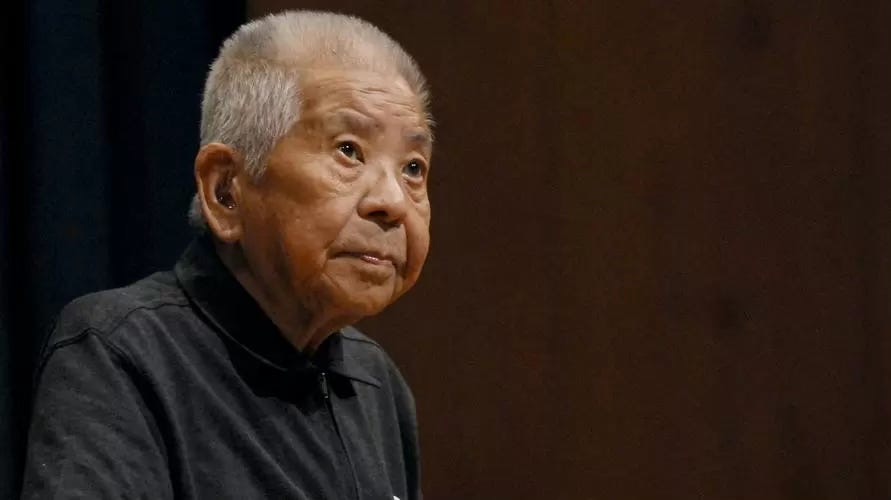
August 6. The morning had begun with nothing to distinguish it from any other.
The heat was already making itself felt, heavy and humid, clothes sticking to the skin. Tsutomu Yamaguchi, a naval engineer, was heading toward the Mitsubishi Heavy Industries shipyard with the ease of someone who had made that route often enough to stop thinking about it.
It was his last day of that business trip.
The thought of going home occupied his mind like a silent promise of normality.
There was no hurry.
No sense of urgency at all.
The day seemed destined to pass without incident.
And perhaps for that reason the detail surfaced so discreetly, almost imperceptibly.
It was not a clear thought, nor a sudden memory, but rather a kind of mild discomfort, as when something is not quite where it should be.
He stopped.
Reached into his pockets.
The small personal stamp, needed to validate documents, had been left behind.
As he went back to fetch it, the sky opened into an impossible white.
It was not an explosion in any sense an explosion allows itself to be understood. First came light, then heat, then a force that tore his body from the ground and threw it away from the morning.
When Yamaguchi regained consciousness, the city no longer obeyed its usual shapes. There was silence where there should have been traffic. Fire where there should have been shade. People walking without direction, as if the world had forgotten the names of its streets.
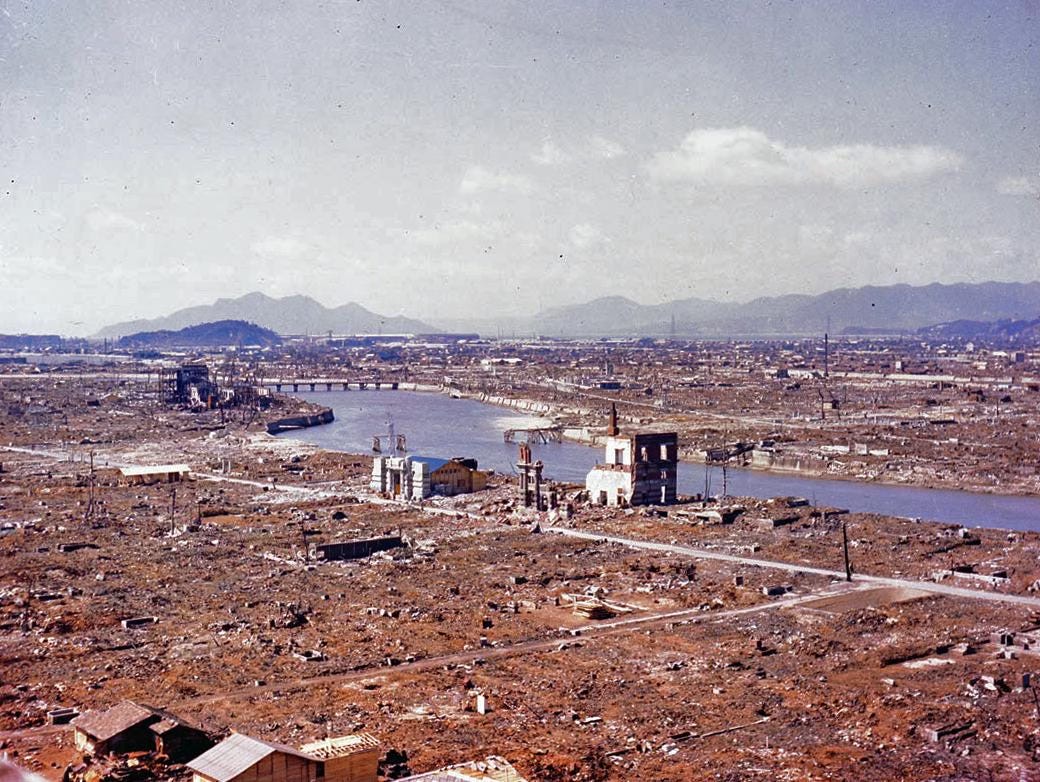
Injured, burned, his ears filled with a continuous noise, he managed to reach a shelter. He spent the night among other survivors, each trapped in their own astonishment.
The next day, he looked for a station.
He wanted to return to Nagasaki.
He wanted to go home.
During the journey, he carried on his body the proof that Hiroshima had happened. But the scale of what he had seen was so absurd that it seemed to resist language. How do you explain a city reduced to a flash of light? How do you tell someone that the air itself had become a weapon?
In Nagasaki, he reported for work.
It was August 9.
Yamaguchi was trying to describe to his superiors what had happened in Hiroshima when a new light cut through the room.
Another bomb.
Another city.
Another morning broken open.
This time, he was protected by the reinforced walls of the building. He survived again. His family survived too, although the city around them had been devastated.
For decades, Tsutomu Yamaguchi lived with the physical and moral scars of those three days. Only later did he become a public voice against nuclear weapons, turning survival into a responsibility.
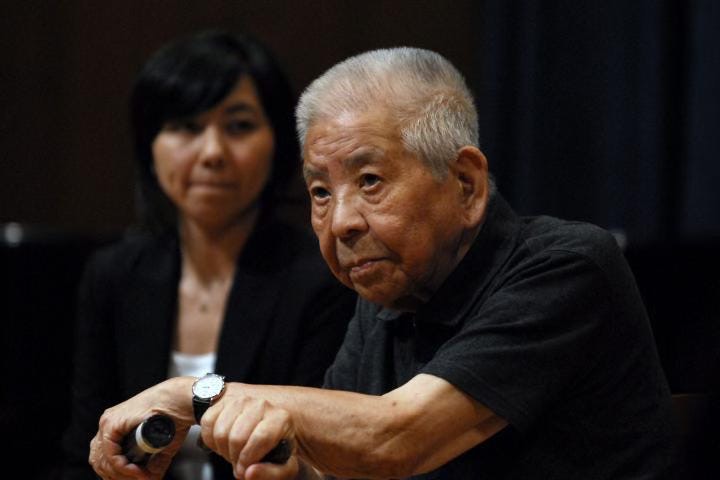
He did not speak as an abstract symbol. He spoke as someone who had twice seen the limit of the modern world.
“Having experienced both atomic bombings and survived, it is my destiny to talk about it.”
— Tsutomu Yamaguchi