For a Time, Ericeira Had a King
And he wasn't who he was supposed to be
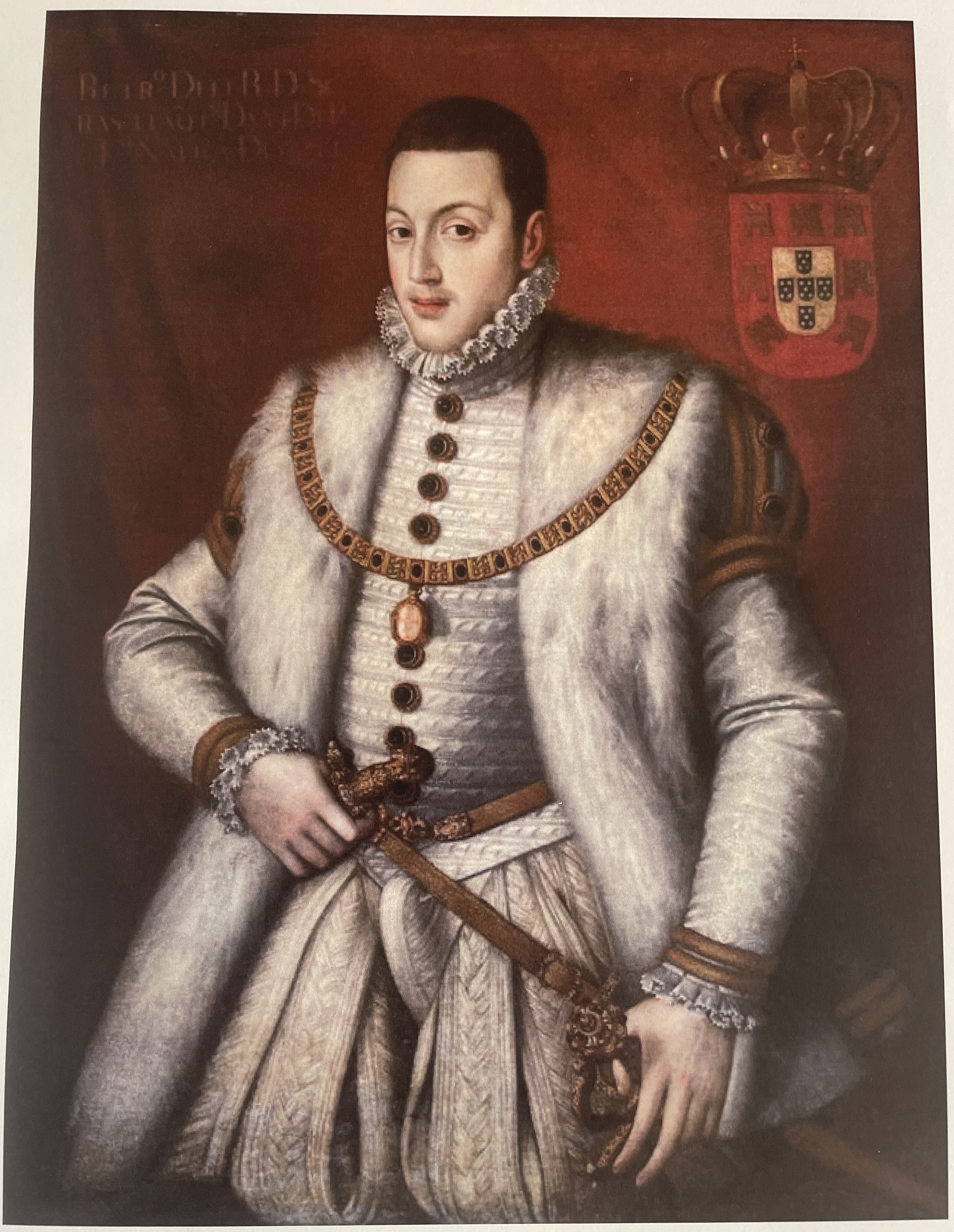
He was not a king who emerged from a palace, surrounded by noblemen, mounted on a warhorse and protected by a disciplined army. He was an unlikely king, born far from court, the son of stonemasons, raised in poverty, made of rumor, faith, and despair. He lived in a hermitage by the sea, fed himself on alms, and for a time there were people who swore that this thin, mysterious man was King Sebastian returned from the fog to save Portugal.
It sounds like the substance of legend, one of those stories a town tells itself to give its past more depth. But it really happened. And it happened in Ericeira.
At the end of the sixteenth century, Portugal was living through one of its most fragile moments. The splendor of the Discoveries was no longer enough to hide the exhaustion of the kingdom. The economy was weakening, taxes were tightening, and, more humiliating than anything else, the country found itself, for the first and only time in its history, under the rule of a foreign king. After the disappearance of King Sebastian at the Battle of Alcácer Quibir in 1578, and the succession crisis that followed, Philip II of Spain assumed the Portuguese crown. The country had not ceased to exist, but it had ceased to govern itself, and for a people used to imagining itself chosen by God and pushed toward the sea by an imperial destiny, that was no small wound.
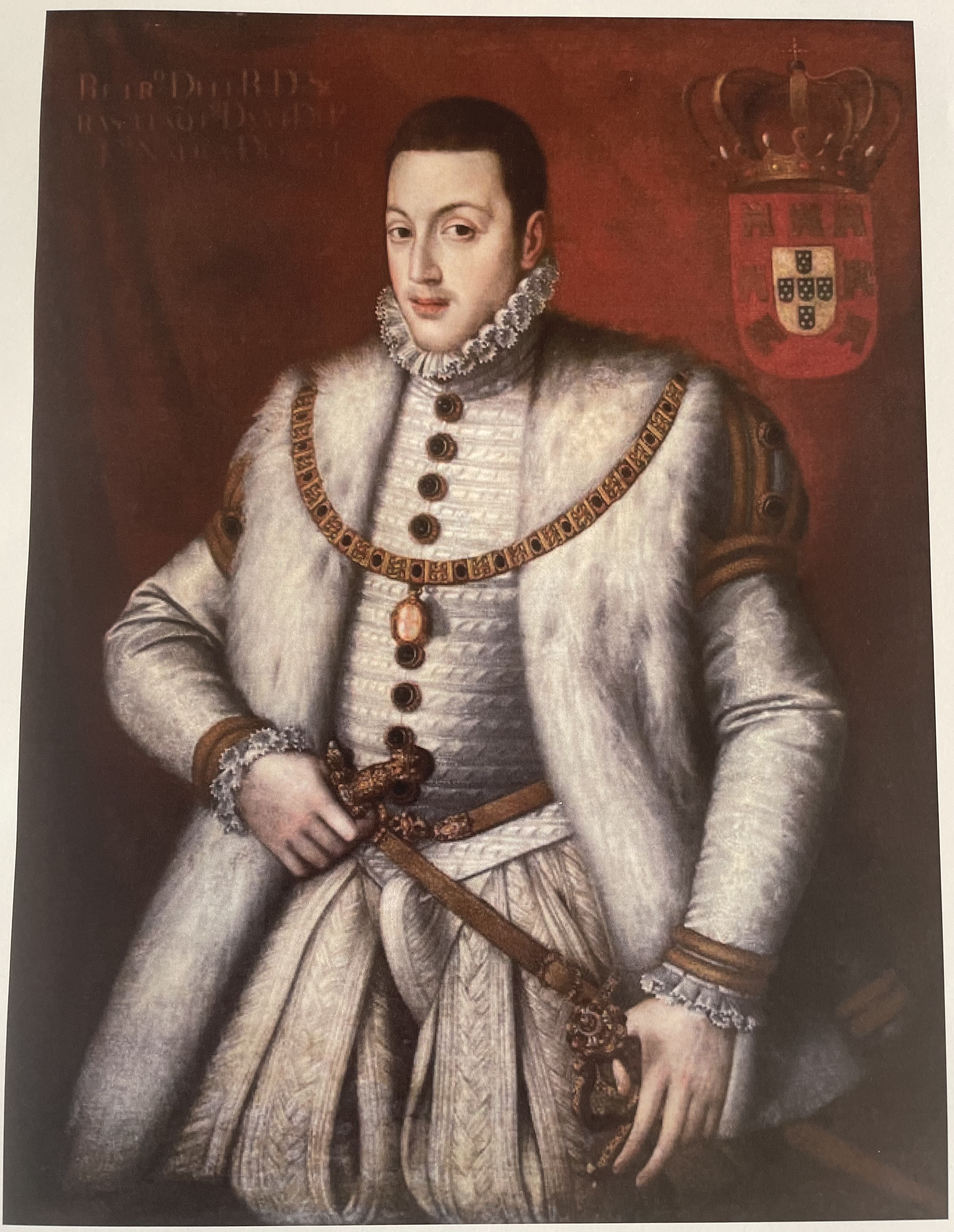
It was in that emptiness that Sebastianism grew: the belief that King Sebastian, the vanished king, had not died in Africa and would one day return to restore independence and give the kingdom back its former greatness. It was not merely superstition. It was a collective need. When a people loses the ground beneath its feet, it invents, or clings to, the promise that someone will come and put it back in place. In Portugal, that someone had a name, a face, and an almost messianic aura. They called him the Desired One. Later they would also call him the Hidden One.
In such a time, it did not take much for a man to become a possibility.
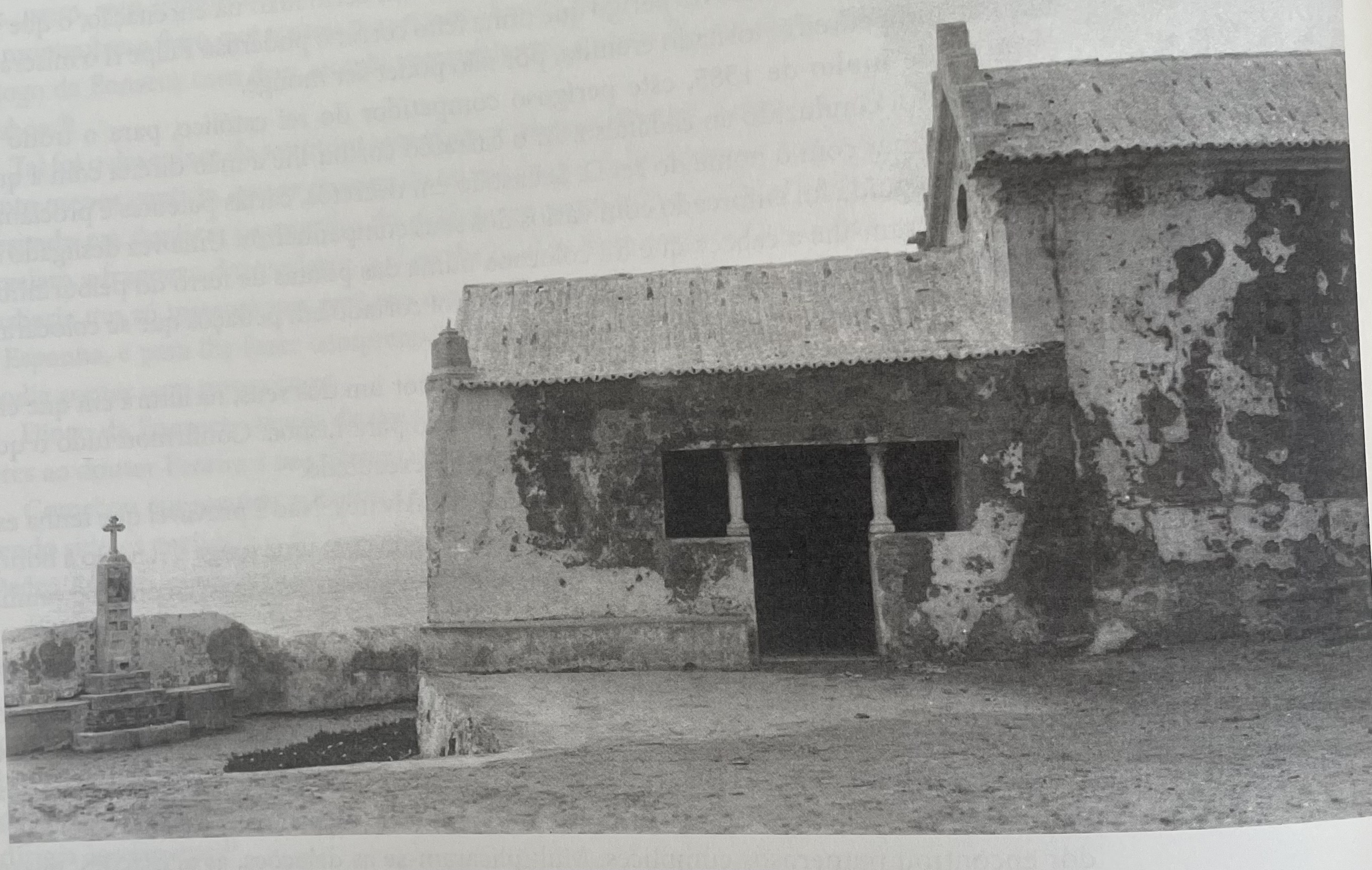
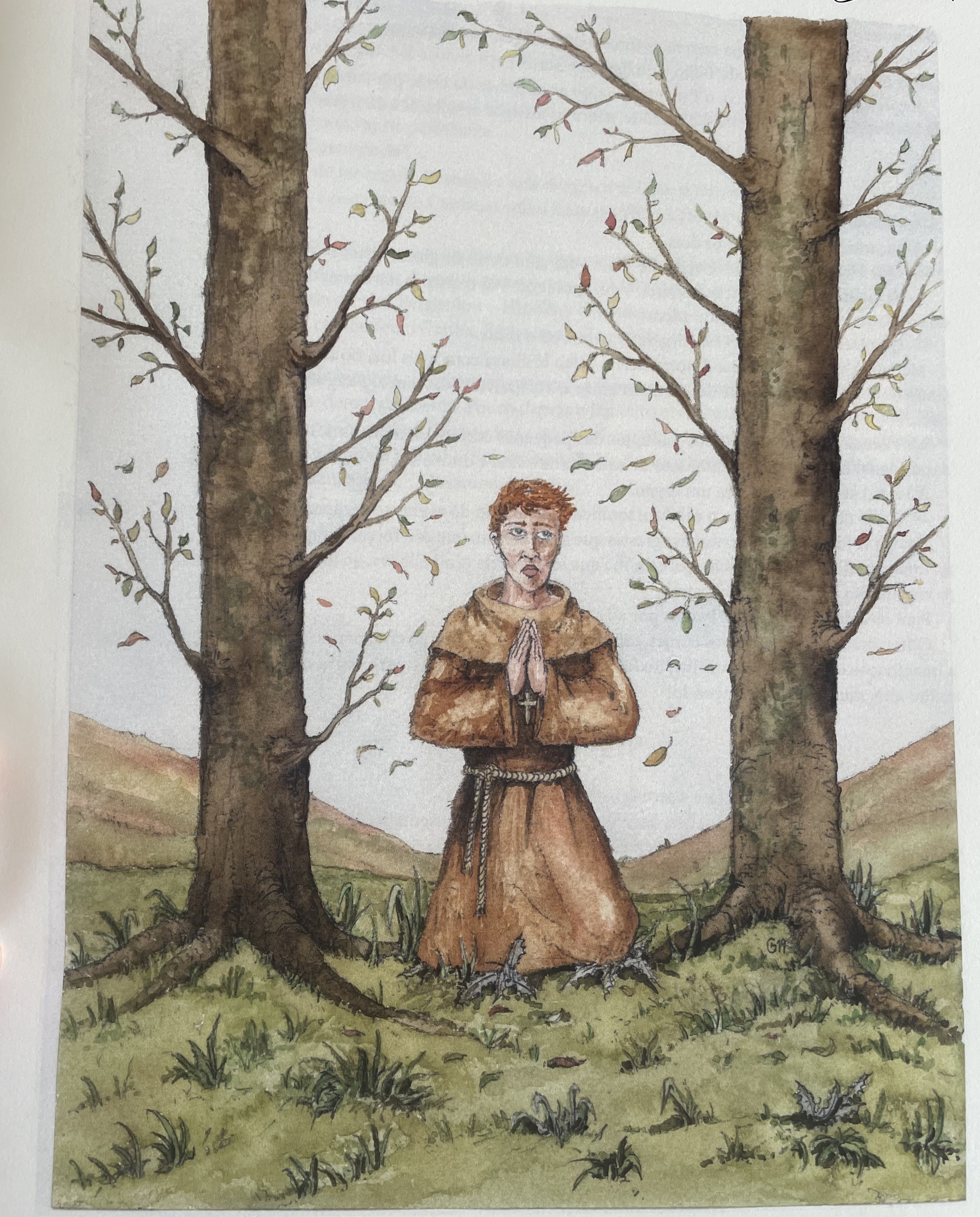
Mateus Álvares was born in 1530 on Terceira Island, in the Azores. He had no royal blood and no connection to the nobility. He was the son of a humble family of stonemasons. Still young, he came to the mainland, entered a convent in Óbidos as a novice, later passed through the Capuchos of Sintra, and eventually abandoned convent life to become a hermit. He settled in the hermitage of São Julião, near Ericeira, in an isolated place close to the sea, exposed to wind, salt, and fog. For two years he lived like so many hermits of that time: apart from the world, sustained by other people’s charity, surrounded by a reputation for penitence and holiness that made him, in the eyes of simple people, closer to heaven than to earth.
It was not rare, then, for hermits to be seen as men touched by some form of revelation. They lived alone, mortified the body, spoke little, and inspired respect. Around them, rumors grew easily. In the case of Mateus Álvares, those rumors quickly found nourishment. It is said that at night he cried out, struck his body, gave himself over to self-flagellation, and pronounced enigmatic phrases about Portugal, guilt, and penitence, as if speaking of a destiny larger than himself. Enough for the question to begin circulating, the question almost everyone in that wounded country wanted to ask: what if it were him?
His physical resemblance to the popular image of King Sebastian did the rest. Imagination completed what reality did not provide. First came the curious, then the devout, then the convinced. Fishermen, peasants, people from the region, but also men with property and influence, began climbing to São Julião to see with their own eyes the hermit rumored to be the lost king. At first, Mateus Álvares is said to have denied it. But there comes a point when the insistence of others opens a door inside us. And when a local landowner, António Simões, a respected and wealthy man, declared without hesitation that this was King Sebastian, Mateus Álvares stopped resisting the role offered to him. He accepted it. And by accepting it, he passed from hermit to king.
Or, more precisely, to the king of Ericeira.
It is difficult today to measure the force of that gesture. This was not merely an individual delusion. What happened in Ericeira was a collision between political need, religious belief, national humiliation, and popular theater. Mateus Álvares did not convince a town alone. The town needed to be convinced. It needed to believe that history could still turn, that the disappeared king could reappear in an unexpected form, that the Spanish empire, however powerful it might be, could be challenged by a man who had come out of a hermitage.
Around Mateus Álvares, decisive figures quickly appeared. António Simões was not only the first to proclaim him: he gave him social legitimacy. Pedro Afonso, a wealthy farmer, former soldier, and fierce enemy of Castilian rule, brought him what visionaries rarely have: practical capacity, resources, men, and the will to move forward. A phrase attributed to Pedro Afonso captures the spirit of the movement well. It mattered little to him, he said, whether Mateus Álvares was or was not the true King Sebastian. Before Saint John’s Day, he guaranteed, the man would be seated on the throne.
That phrase may contain more truth than many royal proclamations of the time. For many of those men, the exact identity of Mateus Álvares mattered less than the political usefulness of the myth. What mattered was finding a face for revolt.
And the revolt took shape.
In Ericeira, where rising taxes, economic crisis, and the weight of Habsburg rule were felt directly, Mateus Álvares found fertile ground. The town lived from fishing and maritime trade, but the mood was one of weariness and frustration. In taverns, people discussed politics, spoke of lost independence, repeated the legend of the king who would return. The hermit of São Julião had appeared in the right place and at the right time.
In a short time, Mateus Álvares gathered close to a thousand men. It was not an army in the classical sense, but it was enough people to frighten the authorities. There were fishermen, peasants, small landowners, men armed with sticks, canes, clubs, will, and fury. The number alone is striking.
At a certain point, however, the movement stopped living only on rumors and began staging power.
There was a procession. There was a wedding. There was a coronation.
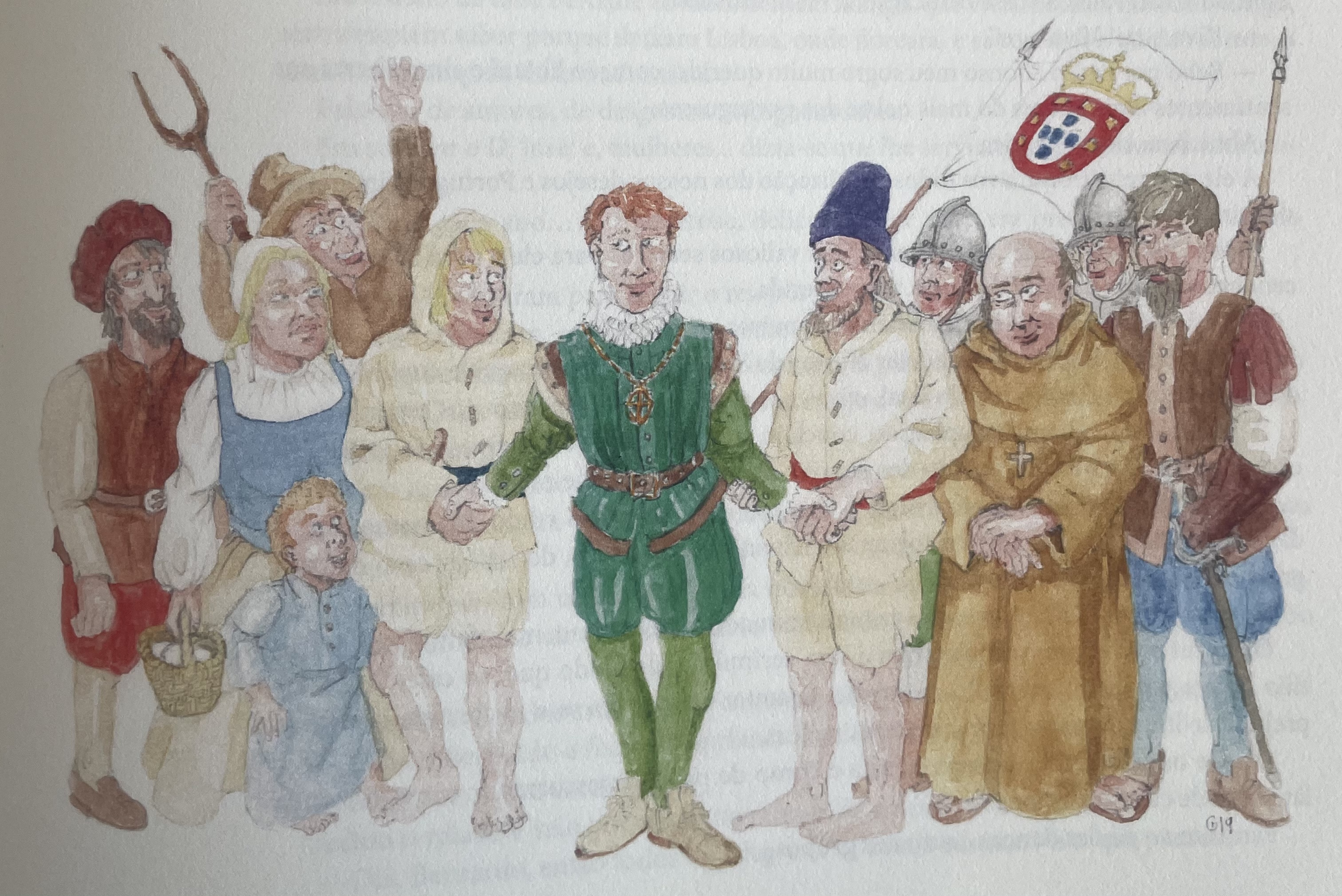
Mateus Álvares moved through the town like a sovereign in procession. At the front went men rudimentarily armed, acting as a royal guard. Then came his “kings of arms,” young men from nearby villages, without much splendor but with all the solemnity they could muster. Pedro Afonso appeared prominently. Mateus Álvares himself rode a white horse, while António Simões held the reins. Beside him came Ana Susana, Pedro Afonso’s daughter, chosen as queen.
In the Largo do Jogo da Bola, before an expectant crowd, the ceremony took place. The chaplain declared the marriage. The people saw, heard, believed. And at the culminating moment, Ana Susana was crowned with a crown stolen from an image of Our Lady.
The gesture was at once sacrilegious and deeply symbolic.
Mateus Álvares then began to act as king on paper as well. He wrote letters, sent orders, distributed titles, signed documents as if the restoration were already underway. In one of the boldest demonstrations of the entire story, he wrote directly to Cardinal Archduke Albert, demanding that he leave the Paço da Ribeira and return to Castile.
When the letter reached court, it was read with astonishment and laughter. But the situation was no longer a farce. There was already blood.
In Ericeira, a magistrate and his clerk had been captured by the rebels and would end up thrown into the sea from the cliffs. In Mafra, Gaspar Pereira do Lago, a court judge and a man tied to Habsburg power, had been kidnapped from his own estate and killed along with relatives.
What had begun as a rumor was now becoming open revolt.
The repression was swift. The rebels were dispersed, captured, tortured. Mateus Álvares was eventually betrayed and arrested. He entered Lisbon with his hands tied and was locked in the Limoeiro prison.
During interrogation, Mateus Álvares immediately confessed that he was not King Sebastian. He did not try to prolong the lie or hide behind evasions. He explained that his true purpose had been to unite the Portuguese against Castilian rule and liberate the country, and he added, with a clarity that surprised those listening, what his words would have been if his mission had triumphed:
“Look well at me. I am not King Sebastian, but I am a good man, a good Portuguese who has freed you from the Castilian yoke. Now that you are free, choose and proclaim as king whomever you wish.”
The sentence was recorded, and it had an immediate effect. It did not sound like the confession of a defeated impostor, but like the formulation of a dangerous idea. By saying that he was not the king and still claiming for himself the role of liberator, Mateus Álvares moved the center of power: it was not in a name, nor in a lineage, but in the possibility of choice.
That was what alarmed the judges. The indulgence previously granted to the so-called king of Penamacor, who had been condemned to the galleys, could not be repeated in this case. Mateus Álvares was not just another impostor. He had gathered an army, caused deaths, and openly challenged the power of Philip II. More than that, he had left an idea in the air that, if tolerated, could be repeated by others.
Mateus Álvares was led to the scaffold. The executioner carried out the sentence in a heavy, almost ceremonial silence. He began by cutting off his right hand, the same hand with which he had signed decrees and proclamations in the name of King Sebastian, fulfilling to the letter the punishment reserved for those who dared falsify royal authority. Then he was hanged, together with several of his companions.
But death was not the end. It was only the beginning of public punishment.
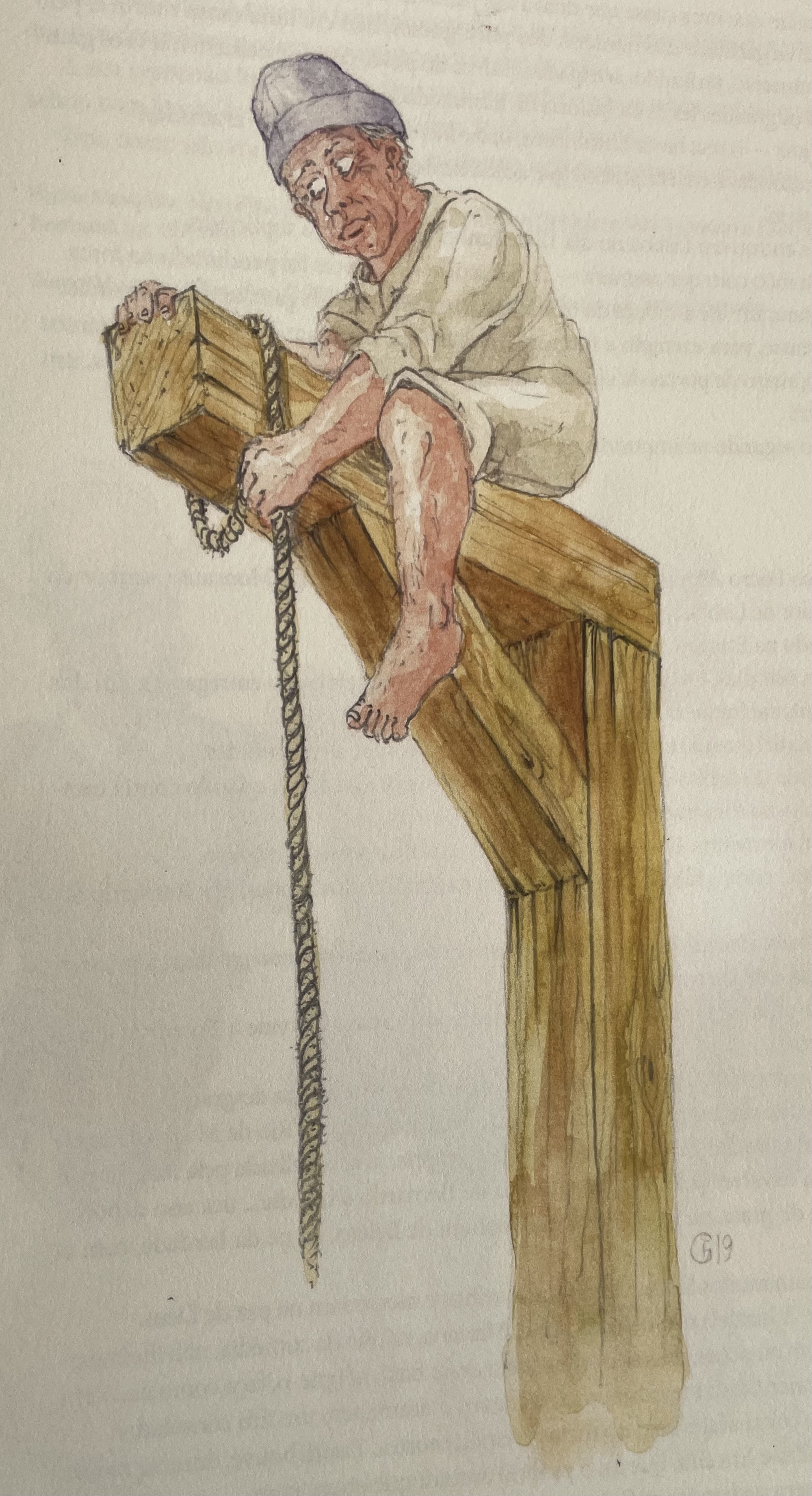
The body was decapitated and the head, still bloody, placed on an iron spike in Lisbon’s Pelourinho, in the place where the Praça do Município opens today. It remained there, raised above the city, so everyone could see and understand. This was not only the punishment of a man, but the marking of an example.
The rest of the body was quartered. The limbs were separated and distributed among the city gates, exposed to the sight of those entering and leaving, turning Lisbon into a map of warning. For days, under the summer heat, the remains stayed there, covered in flies, watched from afar, avoided up close, reminding everyone of the price of disobedience.
In Ericeira, the repression followed the same principle. In today’s Rua do Alto da Forca, the bodies of around twenty accomplices of Mateus Álvares were left hanging, executed in the same gesture of punishment and display of power. Other insurgents were sentenced to harsh terms in the galleys, where they would spend years chained to the oars, in continuous labor that consumed the body to its limit.
Pedro Afonso, Mateus Álvares’s father-in-law and one of his most determined allies, managed to flee for a while, but was eventually found after a persistent pursuit led by the magistrate Diogo da Fonseca. Taken to Lisbon, he confirmed in court what his son-in-law had already declared and received the same sentence. He too was executed.
So ended the revolt of the king of Ericeira. Not with one final confrontation, but with a sequence of punishments designed to eliminate not only the men, but the possibility of repetition.
Mateus Álvares, though he was no king, became a figure of resistance against foreign occupation.
And so ended the king of Ericeira.
It is said that in Largo Jaime Lobo e Silva there once stood a building where the famous King of Ericeira, Mateus Álvares, lived. By sentence, the building was demolished and its ground salted.
Or perhaps he did not end completely.
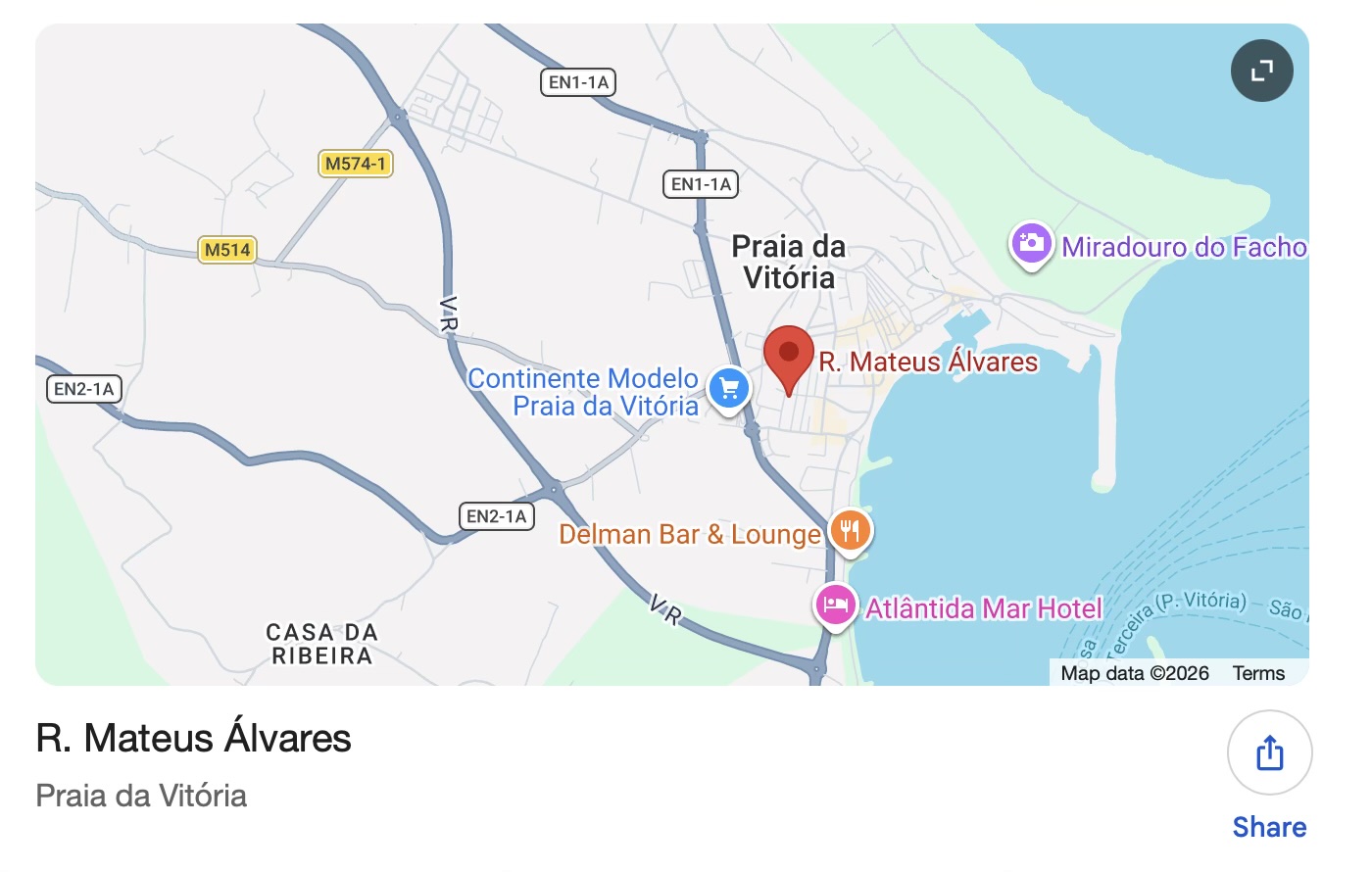
On Terceira Island, in the municipality of Praia da Vitória, where Mateus Álvares was born, there is today the only tribute to this man who, coming from poverty, with little more than a dream, some eloquence, and unusual courage, dared to challenge the power of the only king without Portuguese nationality ever to occupy Portugal’s throne.
The old Rua Nova do Rossio changed its name. It became Rua Mateus Álvares.
There is a simple idea that may explain better than any analysis what remained:
“Because a people loves and hates people, things, and situations, it relates them to the environment in which it lives. It gives the names of all this to the places and streets where it lives so that no one forgets what happened or what existed, for good and for ill.”
To give the name of Mateus Álvares to a street is not merely to honor a man. It is to accept the complexity of his story.
And perhaps that is what remains. Not the king he never was, nor the revolt that failed, but the proof that, for a time, there were people who believed it was possible.